
Tag: FL

  • The Art of Yacht Exterior Designing: Key Elements for a Stunning Aesthetic

    The Art of Yacht Exterior Designing: Key Elements for a Stunning Aesthetic

    Table of Contents

    1. Yacht Exterior Design: Shaping First Impressions
    2. Balancing Form and Function in Yacht Exteriors
    3. Hull Design and Color Schemes
    4. Material Choices for Luxury and Durability
    5. Innovative Features Making Waves
    6. Sustainability Meets Style
    7. Collaborating with Designers for Bespoke Exteriors
    8. Looking Ahead: Future Trends in Yacht Exterior Design
    9. Conclusion

    Yacht Exterior Design: Shaping First Impressions

    The exterior design of a yacht is the ultimate calling card—an immediate statement of elegance, distinction, and innovation. This first visual encounter shapes not only the vessel’s perceived value but also the owner’s status within a community that values luxury and craftsmanship. Whether cruising a sunlit coastline or moored in a bustling marina, a yacht’s exterior silhouette, lines, and finishes are what capture attention and inspire admiration.

    For owners and guests alike, the aesthetic appeal of a yacht offers far more than visual pleasure; it fosters a sense of pride, joy, and a deep-seated sense of belonging. The exterior’s impact on experience is profound, influencing everything from initial excitement as guests come aboard to the lasting impressions left in their memories. For those seeking a customized approach, yacht exterior designing Fort Lauderdale, FL, provides access to blending artistry and engineering, transforming visions into maritime reality.

    Increasingly, designers are incorporating sustainable and innovative materials, allowing yachts to blend luxury with eco-consciousness. Carefully chosen colors, textures, and lighting enhance the vessel’s character, ensuring each yacht stands out as unique. Ultimately, a thoughtfully designed exterior is more than just a visual statement—it offers an immersive experience that celebrates both craftsmanship and personal vision.

    Balancing Form and Function in Yacht Exteriors

    Beauty alone cannot take precedence on the open water. Functionality—relating to hydrodynamics, safety, and practicality—must seamlessly merge with striking form. Premier designs blend sleek hull lines, expansive decks, and uninterrupted windows, all while ensuring the vessel’s systems and safety features are integrated organically. Railings, steps, and access points are thoughtfully designed to guarantee security and usability without detracting from the external flow. When done well, every detail, from the swim platform to the viewing lounges, feels purposeful and visually harmonious.

    Hull Design and Color Schemes: The Foundation Layers

    The hull is the canvas upon which a yacht’s story begins. Today’s trends favor streamlined, angular forms for a futuristic aesthetic, though classic rounded hulls still convey timelessness and tradition. Choices in shape communicate not only about performance, such as speed or stability, but also about the style and spirit of the yacht and its owners. According to Classic Boat, selecting the right marine paint is crucial, as it affects both the protection and the overall aesthetic of your vessel. Colors are equally expressive: whites signify purity and tradition, while bold greys, blacks, and even metallic finishes are associated with innovation and modernity.

    Material Choices for Luxury and Durability

    Material selection in yacht exterior design plays a critical dual role, establishing not only how the yacht looks but also how it withstands the elements. Classic materials like teak and mahogany exude warmth and heritage, though they require careful maintenance. Modern composites, lightweight metals such as aluminum, and a range of tempered, UV-protected glass panels offer both resilience and cutting-edge sophistication. These choices ensure longevity and durability, while providing architects with greater creative freedom to achieve impactful silhouettes.

    Innovative Features Making Waves

    The latest advances in yacht exterior design are radically changing the on-water experience. Retractable decks that expand at anchor, frameless glass railings for uninterrupted vistas, and integrated pools or Jacuzzis exemplify the new era of bespoke features. Other innovations include dynamic awnings, modular furniture, and digital lighting controls—all of which merge high-end living with the thrill of the open sea. Such upgrades continuously reshape expectations in the world of luxury yachting.

    Sustainability Meets Style: Eco-Friendly Yacht Design

    Environmental responsibility has become a driving force in the evolution of yacht exterior design. Builders and owners are increasingly prioritizing sustainable practices, such as specifying certified, sustainable woods, low-VOC finishes, and integrating solar panels into open deck spaces. Modern composites reduce the ecological footprint and improve fuel efficiency. Designers are also exploring hybrid propulsion systems and energy-efficient lighting to further minimize environmental impact. Recycled and recyclable materials are being incorporated wherever possible, promoting a circular approach to yacht construction. Ultimately, sustainability is becoming a hallmark of modern luxury, proving that elegance and ecological responsibility can coexist seamlessly.

    Collaborating with Designers for Bespoke Exteriors

    A dream yacht exterior is seldom a solo venture. Working with professional yacht designers ensures not only visual perfection but also compliance, safety, and the realization of unique personal visions. The process often begins with hand-drawn sketches, followed by intricate digital renders and material selections, before finally moving to full-scale production. Through collaboration, owners see their aspirations take physical form, while designers offer technical guidance and style leadership to harmonize functionality and imagination.

    Looking Ahead: Future Trends in Yacht Exterior Design

    Looking forward, yacht exterior design is set to become even more personalized, with new technologies, materials, and sustainability initiatives leading the charge. Automated shading, augmented reality windows, and biodegradable finishes are just a taste of what lies ahead. Simultaneously, there is an increasing emphasis on individuality—no two yachts need look or feel quite the same. The integration of AI for onboard systems and digital twin models in the design phase is also poised to transform how owners and designers interact with exterior concepts.

    Conclusion

    The art of yacht exterior designing is a balance of science, artistry, and personal expression. From foundational elements like hull shape and color to luxurious materials and cutting-edge technologies, every detail serves to create an unforgettable first impression and an enduring mark of individuality. Approaching each vessel as a unique masterpiece ensures not only a stunning aesthetic but also a testament to the owner’s vision—redefining what it means for a yacht to stand out truly.
  • How Reggio Daycare Fosters Creativity and Critical Thinking in Young Learners

    How Reggio Daycare Fosters Creativity and Critical Thinking in Young Learners

    The Reggio Emilia approach to early childhood education offers a vibrant, child-centered philosophy that reimagines what learning can look like when driven by curiosity, collaboration, and creativity. Rooted in post-war Italy, this innovative method emphasizes respect for children’s voices, encourages exploration through project-based learning, and recognizes the environment as an essential part of the teaching process. Whether it’s in the structure of a thoughtfully arranged classroom, the use of open-ended materials, or the cultivation of meaningful relationships between children, teachers, and families, Reggio-inspired practices nurture critical thinking and self-expression from the very start. This comprehensive guide explores the foundational principles of the approach, its emphasis on the learning environment, the role of creativity and inquiry, and how families and educators alike can bring its spirit into everyday experiences, transforming education into a collaborative journey of discovery.

    Foundations of the Reggio Emilia Approach

    The Reggio Emilia approach stands out worldwide for its truly child-centered vision of early childhood education. Developed in the small Italian town of Reggio Emilia in the aftermath of World War II, this philosophy emerged from a community’s belief that young children are brimming with potential and that education is a powerful force for societal betterment. Rather than following rigid curricula, the Reggio Emilia approach emphasizes cultivating children’s natural creativity and curiosity. Over the decades, this method has inspired countless programs and transformed early years classrooms into spaces of wonder, communication, and self-expression. Reggio-inspired institutions, including Reggio daycare Nocatee, FL, reflect these priorities through their day-to-day activities, where learning becomes a collaborative adventure shared between children, families, and educators.

    At the heart of the Reggio Emilia philosophy is the acknowledgment that each child brings unique insights, interests, and abilities to the classroom, making learning a highly individual process. Teachers do not deliver set lessons but instead observe, listen, and document children’s ideas, allowing the curriculum to be shaped by the children’s emerging questions and fascinations. This flexible, democratic approach ensures that young learners remain actively engaged and encourages them to become confident thinkers from an early age. When a community comes together under this shared belief in children’s potential, the entire educational journey becomes richer for everyone involved. Such foundational principles spark the creative and critical thinking so valued in Reggio-inspired care.

    The Role of the Environment in Early Learning

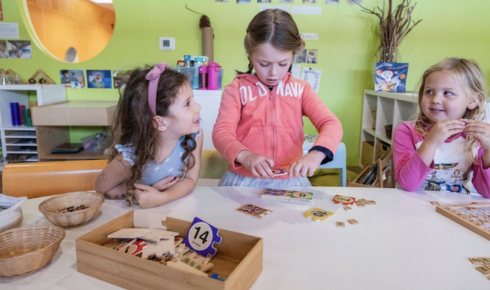
    In a Reggio-inspired daycare, the physical environment is carefully crafted to serve as a “third teacher,” influencing both peers and adults alongside them in the learning process. Unlike conventional classrooms filled with plastic toys and single-use materials, Reggio spaces often feature natural light, artistic touches, greenery, and areas that foster both independent thought and group exploration. The classroom becomes a living, evolving landscape where children are free to move materials, redesign their workspaces, and showcase their ongoing projects. As explained in Parents magazine’s guide to the Reggio Emilia philosophy, this approach emphasizes how children thrive in environments that respect their ideas and give them ownership over their learning journey. This level of autonomy helps children become invested in their settings, understanding order, responsibility, and their ability to shape their learning experience. For example, an art corner might be equipped not only with paints and brushes, but also with baskets of acorns, fabric remnants, wire, and cardboard—materials that open up endless possibilities. Such resources inspire children to invent new ways of using familiar objects and to collaborate on projects that stretch their imagination. Pod areas, reading nooks, and outdoor gardens invite discovery and reflection, providing the “canvas” for creative work. Studies show that when children have agency over these adaptive, resource-rich environments, they tend to initiate more projects and deepen their inquiry, which lays the groundwork for the kinds of real-world problem-solving skills essential for future success.

    Fostering Creativity Through Open-Ended Materials

    Providing access to a diverse range of open-ended materials is a central aspect of the Reggio approach. Rather than prescribing how art materials should be used, educators invite children to follow their intuition, blend resources in new ways, and build on each other’s ideas. Children frequently combine driftwood, feathers, bottle caps, and seeds to assemble imaginative constructions that might be ships one day and fantastical creatures the next. This hands-on, experimental play is essential for developing creativity, collaboration, and perseverance.

    Real-life observations from Reggio classrooms reveal the profound impact of these opportunities. For example, in one class, a group of young children collaborated to create a “talking wall” using recycled materials, such as fabric, ribbon, and cardboard tubes, which fostered dialogue and playful storytelling. In another, children used clay and natural objects to illustrate animal habitats, deepening their scientific knowledge and expressive vocabulary simultaneously. Such rich, open-ended materials allow for abundant creative risk-taking, underpinning children’s ability to ask questions, test theories, and proudly share their imaginative journeys with others.

    Encouraging Critical Thinking With Project-Based Learning

    Meaningful project-based learning is a distinguishing feature of the Reggio Emilia methodology. Rather than isolated lessons, projects often unfold over several days or weeks, driven by children’s evolving interests and anchored in their real-world observations. Educators support this process by helping children brainstorm questions, design experiments, collect data, and present findings to others. Projects might start small, such as a curious glance at a worm in the playground, then expand to become multi-layered investigations spanning habitats, lifecycles, and even artistic interpretations. As highlighted in Edutopia’s exploration of project-based learning in pre-K classrooms, this approach nurtures essential skills such as collaboration, problem solving, and critical thinking through immersive, hands-on experiences.

    Children document their progress with journals and photographs, revisiting and reflecting on their experiences as they progress. This cyclical process—asking, researching, creating, revising—strengthens cognitive abilities and communication skills. Building bug hotels, local waterways research, or shared storytelling are all ways Reggio classrooms nurture the curiosity and grit that lay the groundwork for future academic and personal growth.

    • Children may design a community garden, sparking questions about biology, teamwork, and sustainability.
    • Art-based projects might explore the idea of “identity,” inviting children to create self-portraits using mixed media.
    • Math and science inquiries could involve building bridges, measuring shadows, or testing the buoyancy of handmade boats.

    The Importance of Collaboration and Communication

    The Reggio Emilia approach places immense value on social learning. Learning in these settings is both an individual and collective pursuit. Through collaborative play, group discussions, and co-created projects, children develop not only critical thinking but also vital communication and empathy skills. Dialogues are encouraged in daily routine, with teachers facilitating respectful exchanges and challenging children to articulate their thoughts and consider alternative perspectives.

    These collaborative opportunities extend beyond the classroom walls. Many Reggio programs engage families in ongoing projects, invite community artists to work alongside children, or integrate real-world experiences such as local museum visits. This ecosystem of learning strengthens children’s sense of belonging, helping them understand that their contributions are valued by their peers and the broader community. As their confidence in self-expression grows, so does their willingness to collaborate, a key factor in later academic and workplace success, as demonstrated by research.

    Evidence of Success: What Research Says

    The effectiveness of Reggio Emilia-inspired practice is increasingly supported by global research. Studies consistently demonstrate that children engaged in open-ended, inquiry-rich environments show higher-order thinking, stronger language development, and more resilient social-emotional skills than peers in more structured, directive settings. These learners are better equipped to reason, debate, and see value in diverse perspectives.

    By prioritizing reflection, collaboration, and the unique voices of each child, the Reggio model creates environments where creativity and critical thinking aren’t just taught—they are lived experiences, shaping learners throughout life.

    Practical Suggestions for Parents and Caregivers

    • Curate a home environment rich in simple, versatile materials—such as recycled cardboard, washable markers, fabric scraps, small stones, and clay—and allow children to access and arrange them as inspiration strikes.
    • Use open-ended questions daily to prompt thoughtful responses, such as “What do you think will happen if…?” or “How did you decide to do it that way?” to encourage children to think out loud and reflect on their decisions.
    • Offer opportunities for independent problem-solving. Let children work through challenges with patience, resisting the urge to step in too quickly. This builds confidence and creative resilience.
    • Foster collaborative projects as a family, like inventing stories together, gardening, or creating family murals. Celebrate the process over the product, emphasizing teamwork and shared learning.
    • Honor each child’s ideas by documenting their work, displaying creations proudly, and revisiting their questions to encourage ongoing curiosity and critical inquiry.

    Whether embraced in a formal setting or integrated into daily family life, the Reggio Emilia philosophy reminds everyone that nurturing creativity and critical thinking is not about following a formula—it’s about empowering children to observe, question, and construct meaning from the world around them. The journey is both profoundly personal and joyfully communal, laying a lifelong foundation for engaged learners and compassionate citizens.